How to Safely Treat Algae and Moss on Your Roof in Gainesville
Algae and Moss Treatment for Residential Roofs in Gainesville
In Northeast Georgia’s warm, humid climate, it’s common for homeowners to notice black streaks or green patches on their roofs. These are signs of algae or moss—and they’re more than just cosmetic issues.
At L&L Roofing & Construction, we’ve helped homeowners across Gainesville, Dawsonville, Cumming, Buford, and surrounding areas tackle this problem the right way—with integrity, not shortcuts.
Here’s what you need to know.
What’s Growing on Your Roof?
Algae (usually Gloeocapsa magma) looks like dark streaks running down your shingles.
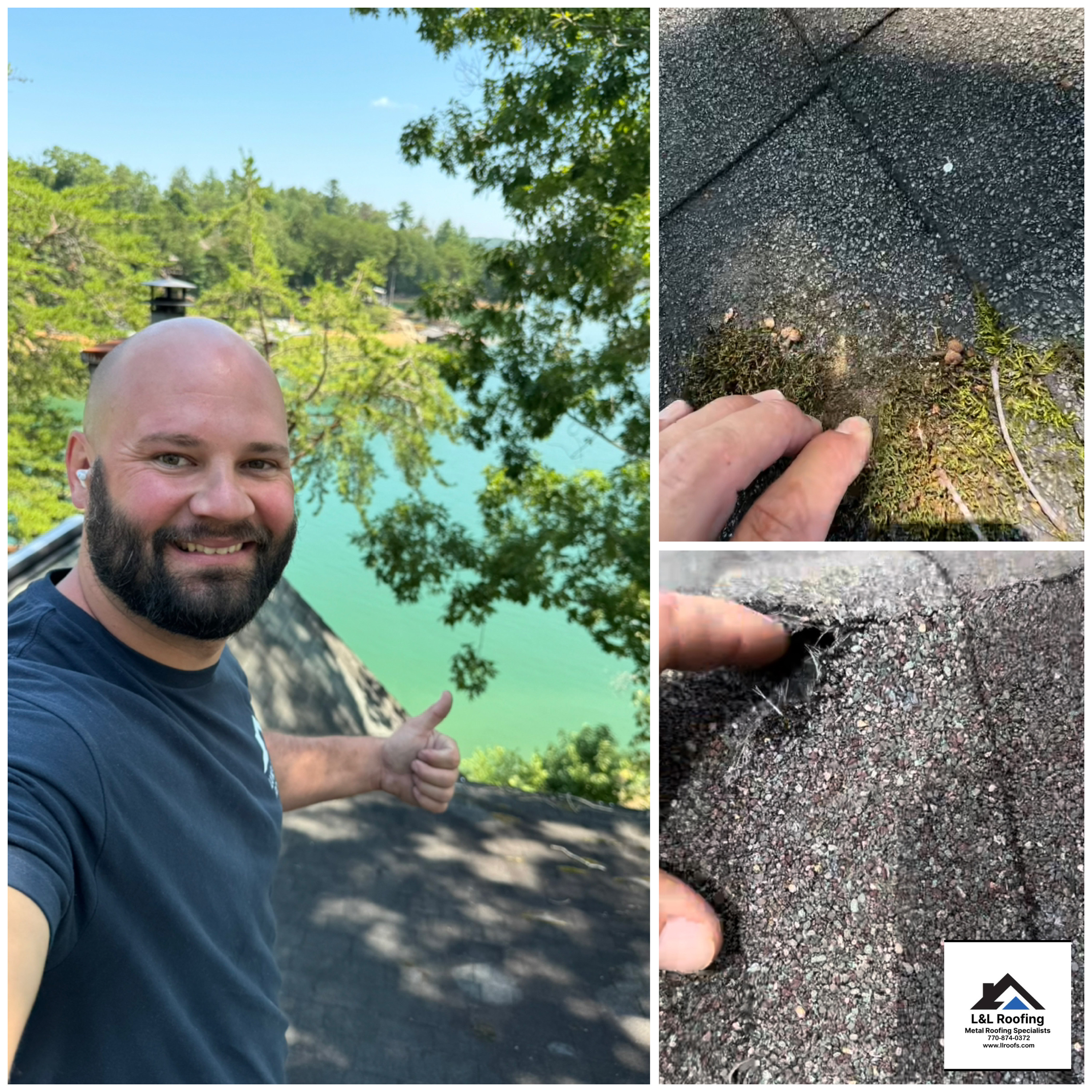
Moss is green, fuzzy, and tends to grow in shaded, moisture-rich areas like under tree canopies or on north-facing roof slopes.
Both can:
Trap moisture and shorten the life of your shingles
Loosen granules from asphalt shingles
Lead to wood rot, leaks, and mold inside your attic
Is It Really a Big Deal?
Yes—and here’s why:
Moisture Retention: Moss holds water against your shingles, which accelerates wear and can compromise your underlayment.
Structural Damage: Over time, moss roots can lift shingles, giving rainwater a path to your roof deck.
Insurance Issues: Some home insurers in Georgia have started flagging heavy moss growth as a maintenance risk, affecting coverage.
Safe and Effective Algae/Moss Removal
We do not recommend scraping or pressure washing your roof. That can remove protective granules and void your roof warranty.
Here’s how we treat it right:
Low-Pressure Chemical Application: We apply a safe, biodegradable solution that kills algae and moss at the root—without damaging your shingles.
No Rinse Needed: The rain naturally washes away the dead growth over time.
Roof Inspection Included: We check for lifted shingles, soft decking, or signs of early damage during the same visit.
We’ve treated roofs in Gainesville neighborhoods like Creekside Estates and New Holland using this exact method—with outstanding results.
How to Prevent Algae and Moss from Coming Back
After your treatment, here’s what we recommend:
Zinc or Copper Strips: We install these near the ridge line. When it rains, the runoff helps inhibit future growth.
Trim Overhanging Branches: More sunlight means faster drying and less moss.
Keep Gutters Clean: Standing water or clogged downspouts can contribute to moisture retention.
FAQs
How often should I have my roof treated for algae or moss?
Every 2–5 years depending on your home's shade, ventilation, and exposure to moisture.
Can I use bleach or vinegar myself?
We don’t recommend it. DIY mixes often damage your roof, void warranties, and can harm nearby landscaping.
Will this treatment damage my plants?
No. Our technicians carefully rinse and shield landscaping before and after application.
Do you treat metal, tile, and shingle roofs?
Yes. We adjust our methods based on your roof material—whether it’s asphalt shingle, standing seam metal, or tile.
A Clean Roof is a Healthy Roof
Algae and moss are warning signs your roof needs attention—not just cleaning. At L&L Roofing, we treat the root of the problem and back it with honest service, not upsells.
Ready to restore your roof’s appearance and lifespan?
Call us at (770) 874-0372 or visit llroofs.com to schedule a free inspection.
Because at L&L Roofing, we do the right thing—because it’s the right thing.