How to Test for Leaks in a Shingle Roof
How to Test for Leaks in a Shingle Roof
Leaks don’t always show up where you expect them. At L&L Roofing & Construction of Gainesville, we know from experience that shingle roof leaks can travel — and that pinpointing the real source requires more than just climbing a ladder and taking a look.
Here’s how professionals approach leak testing, and how you can spot early warning signs before costly damage sets in.
Why Shingle Roofs Leak in the First Place
Before testing for a leak, it helps to understand where problems usually begin. Common culprits include:
Cracked or missing shingles
Worn or improperly installed flashing
Nail pops or exposed fasteners
Clogged or overflowing gutters
Improper roof ventilation (leading to condensation)
Ice dams in colder seasons
Valleys and roof penetrations (chimneys, vents, skylights)
Step-by-Step: How We Test for Roof Leaks
1. Interior Inspection (Start in the Attic)
Before anyone gets on the roof, we inspect from underneath. Signs of a leak often show up in your attic before they’re visible outside:
Water stains or streaks on rafters, insulation, or sheathing
Mold or mildew growth
Daylight peeking through the roof deck
Musty smells indicating moisture buildup
If you're in Gainesville or nearby, and you're comfortable doing so, you can safely check your attic with a flashlight. If not — call us. We’ll handle it.
2. Exterior Walkthrough
Once we’ve examined the inside, we walk the perimeter and check for:
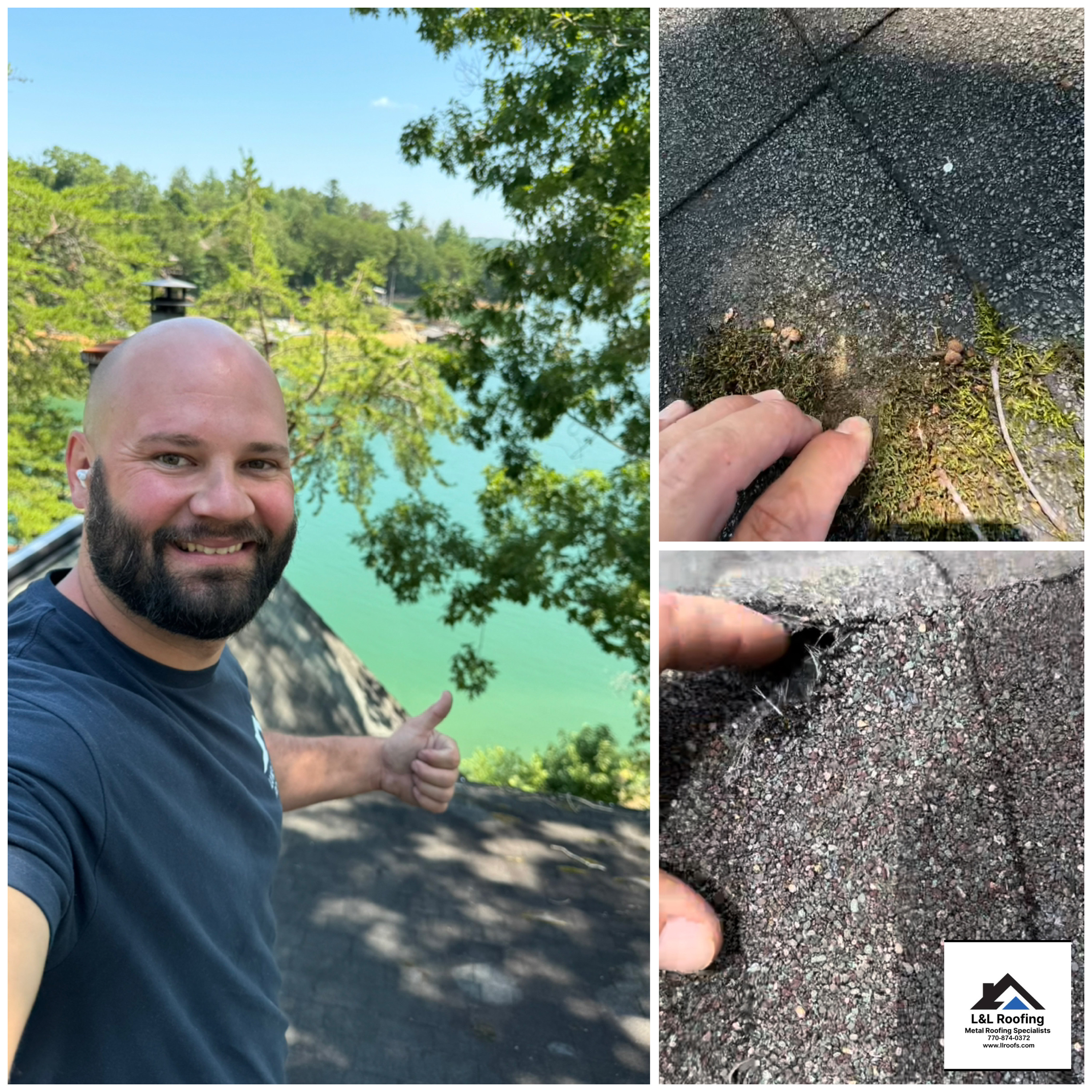
Shingle damage or curling
Signs of hail impact or wind lift
Buckled flashing around vents and chimneys
Staining or granule loss
Pro tip: Sometimes, what looks like cosmetic wear is actually the first sign of a leak developing.
3. Controlled Water Testing
When the source isn’t obvious, we perform a spray test — a proven leak detection method:
One team member stays in the attic with a flashlight.
Another uses a garden hose on the roof, spraying one section at a time.
We start low and move upward until we see water intrusion.
Once the leak shows up, we mark the source.
This method works especially well in Gainesville’s unpredictable weather, where leaks often don’t show until the next big rainstorm.
4. Thermal Imaging (Advanced Testing)
On larger or more complex homes, we use thermal imaging to detect moisture trapped under shingles or inside walls — often before any water stains are visible.
Can You Do It Yourself?
Yes and no.
You can inspect your attic and walk the perimeter after a storm.
But getting on your roof, especially a steep one, is dangerous without proper training and gear.
Plus, not all damage is obvious — some leaks are caused by small gaps in flashing that only show under certain wind-driven rain conditions.
Don’t Wait Until You See a Stain
Here in Gainesville and surrounding towns like Cumming, Dahlonega, and Flowery Branch, we’ve repaired hundreds of shingle roofs where the damage was hidden for months.
Small leaks don’t stay small. Over time, they can ruin insulation, rot roof decking, and lead to mold inside your walls.
If your roof is over 10 years old — or if you’ve seen any of the warning signs — call us for a professional inspection. We’ll give you honest answers, no scare tactics.
FAQs
How do I know if my roof is leaking or if it’s just condensation?
Check for signs of mold, musty smells, or wet insulation even when it hasn’t rained. Condensation often points to a ventilation issue, not a roof defect — and we handle that, too.
Will insurance cover my roof leak repair?
If the leak was caused by storm damage (hail, wind, etc.), it may be covered. We’ll help document the damage and work with your adjuster.
How long does a shingle roof last in Gainesville?
Most asphalt shingle roofs last 20–25 years. But Georgia’s storms, humidity, and tree coverage can shorten that lifespan if routine maintenance is skipped.
Trust Gainesville’s Local Roofing Experts
At L&L Roofing, we believe in doing the right thing — even when no one’s watching. That means honest inspections, quality repairs, and treating your home like it’s our own.
If you think your roof might be leaking — or you just want peace of mind before the next storm — give us a call at (770) 874-0372.